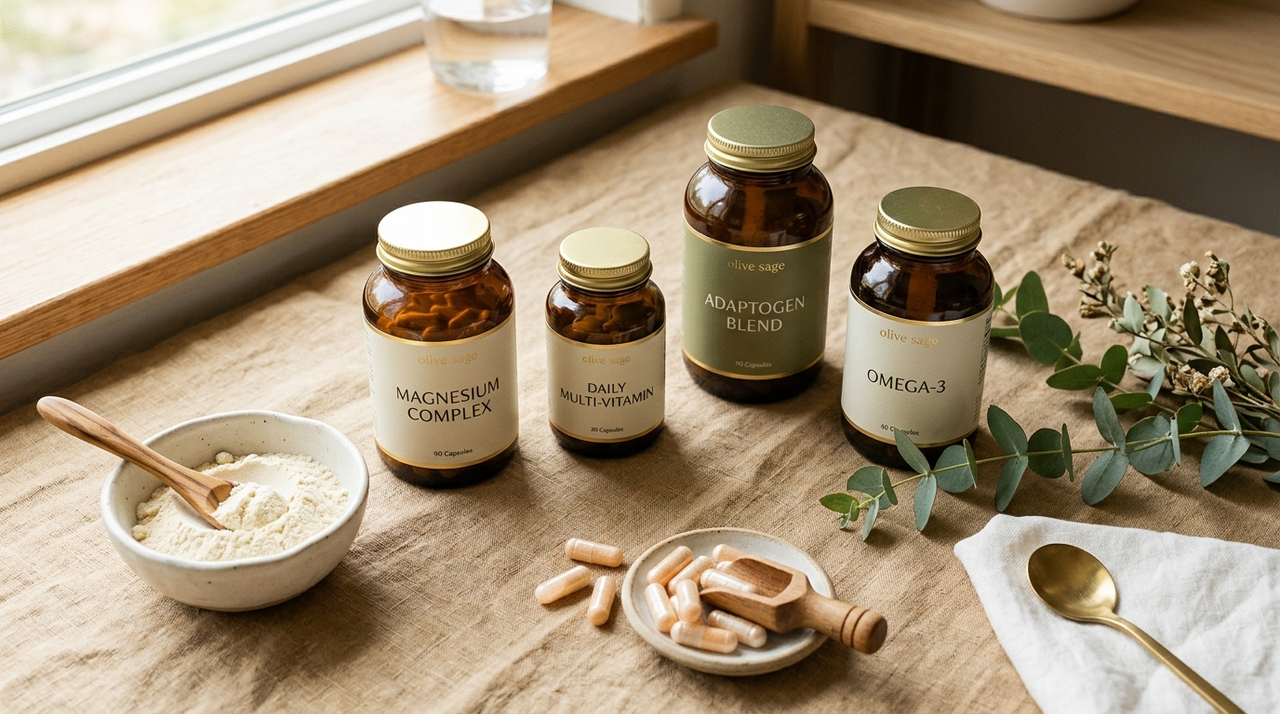
When appetite drops on a GLP-1, total food intake usually drops too — and with it, some of the nutrients your body relies on. A few well-chosen supplements can help you protect muscle, energy, and gut health while you focus on your goals. Talk to your provider before starting anything new.
Protein
Eating less makes it easy to under-eat protein, which is exactly what you want to protect while losing weight. A quality protein supplement makes hitting your target far easier.
Electrolytes and magnesium
Lower intake can mean lower electrolytes. Magnesium in particular supports sleep, relaxation, and recovery — and is one many adults are short on.
Vitamin D and omega-3
Two of the most common gaps in the modern diet. Both are foundational for overall health and easy to cover with practitioner-grade formulas.
Gut support
Digestion can change on a GLP-1. Gut-lining and microbiome support is worth discussing with your provider if you notice changes.
Keep it simple
- Cover the foundations first: protein, magnesium, vitamin D, omega-3.
- Choose practitioner-grade quality over drugstore fillers.
- Let your labs and provider guide anything beyond the basics.
Frequently asked questions
Do I really need supplements?
Food first, always — but on reduced intake, targeted supplements help fill predictable gaps.
How do I know which ones?
Labs plus a provider breakdown take the guesswork out. Start there.
Curious whether this fits your goals? Take the 2-minute quiz to see your match, or start with labs and build your plan around your numbers.
This article is for general education only and is not medical advice, a diagnosis, or a treatment recommendation. Any treatment is determined by a licensed provider after a health intake, and not all patients will qualify. Compounded medications are not FDA-approved. Results vary.